Five signs your record is worth real money
Rarity, first pressings, condition — the five things that set a record's price.
Most records are not rare. The vast majority of vinyl ever pressed sold in huge numbers, was bought by people who loved the music, and is worth a few dollars today no matter how clean it is. That is fine — but it means the valuable copies hide in plain sight among the common ones. Knowing what separates a five-dollar record from a five-hundred-dollar one lets you spot the difference at a flea market table before anyone else does.
Here are five signals that a record might be worth real money. None of them is a guarantee on its own, but when several stack up on the same disc, pay attention.
1. It is a first pressing — and you can prove it
For collectors, the *first* pressing of a famous album is the one that matters. It is the version that existed when the music was new, often with better sound from fresher master tapes, and it is the version everyone wants. Later repressings of the same title can be worth a fraction as much.
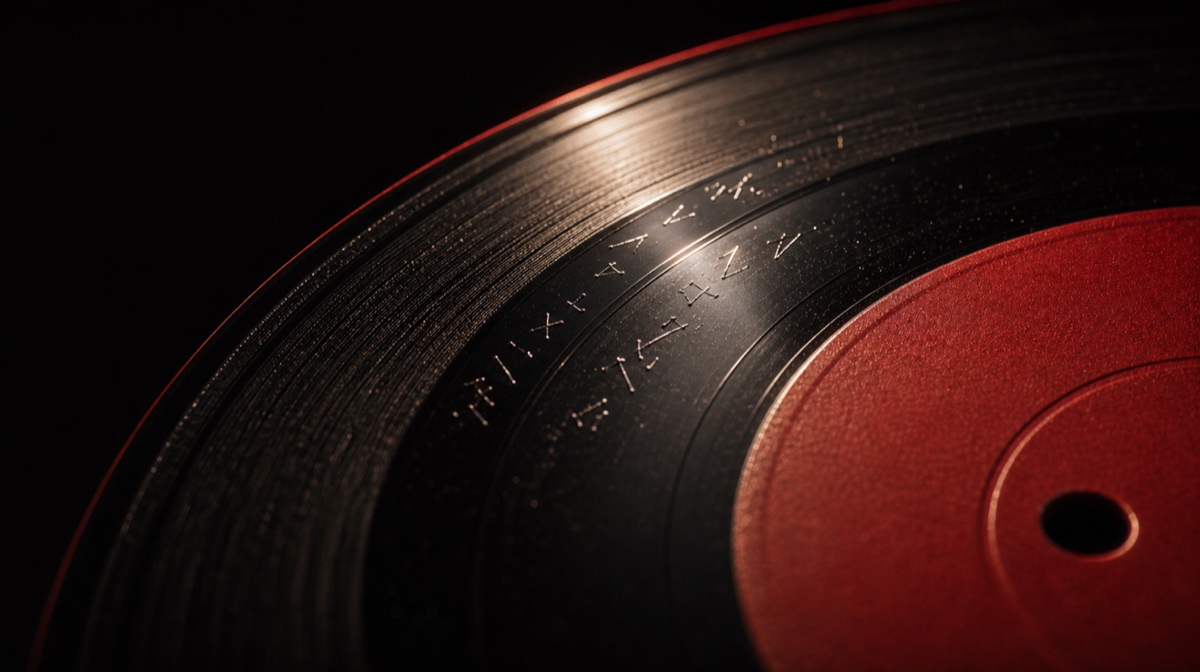
The catch is that first pressings rarely announce themselves. You prove them with details: the catalog number stamped in the run-out groove, the specific label design, the pressing plant, the country of manufacture. A US copy and a UK copy of the same album can differ in value by an order of magnitude. This is exactly why VinylLens shows you the pressing and a confidence score — the pressing is where the money is, and getting it wrong costs the most.
2. The country of origin is the right one
Where a record was made matters as much as when. Collectors often prize the original-country pressing — the UK pressing of a British band, the US pressing of an American one — because that is usually where the best master tapes lived and where the smallest, most sought-after early runs happened. An export edition, a club edition, or a pressing from a different territory can look identical on the shelf and sell for a tenth of the price. The label catalog number is your tell.
3. It is genuinely scarce, not just old
Age and rarity are not the same thing. A 1970s chart-topper that sold ten million copies is old and common; a small-label jazz or soul record that pressed a few thousand copies can be far younger and far rarer. Scarcity comes from short runs, regional releases, quickly withdrawn versions, or albums by artists who only became famous later. If a title is hard to find *clean*, and demand outstrips the supply that survived, the price climbs. Old alone means almost nothing.
4. There is something different about this specific copy
Variants are where serious money hides. A misprint on the jacket, an early label design that was corrected on later runs, a track that was pulled and replaced, a cover that was banned and reissued, a colored-vinyl or limited edition — any of these can turn an ordinary title into a prize. Promotional copies, marked "not for sale," are often pressed in tiny quantities and chased hard. Train your eye to notice when a copy does not quite match the standard version. That mismatch is sometimes worth more than the record itself.
5. Condition backs up everything else
A rare first pressing in beaten-up shape is worth a fraction of the same record clean. Condition is the multiplier that sits on top of every other signal. The grading scale — M, NM, VG+, VG, G — is not a formality; it is the difference between book value and a tenth of book value. A genuinely scarce record in Near Mint can command a strong price, while the same title in Good condition slides toward the bargain bin. When the first four signals all point up, condition decides how high the number actually goes.
Putting it together
No single signal makes a record valuable. The expensive copies are the ones where the signals stack: a true first pressing, from the right country, of a genuinely scarce title, with an interesting variant, in honest Near Mint shape. Most records will check none of these boxes, and that is exactly why the ones that check several are worth knowing how to find.
The next time you are flipping through a crate, you are not really looking at records — you are looking for the stack of signals that the crowd walked past. Scan one and see where it lands.
FAQ
Does a rare record always sell high?
Not on its own. Price comes from rarity meeting demand in good condition. A scarce record nobody wants — or one in rough shape — stays cheap.