How to spot a first pressing: 5 signs
Matrix codes, catalog numbers, logos — how dealers call a first pressing.
The same album can be worth ten times more as a first pressing than as a later reissue. The reason is simple: first pressings are the scarcest, the closest to the master tape, and the most chased by collectors. The hard part is that the cover often looks identical — the difference hides in places you'd never check first. These five signs are the hard evidence dealers use to judge whether a record really is a first pressing, listed roughly from most to least reliable.
1. Read the runout matrix
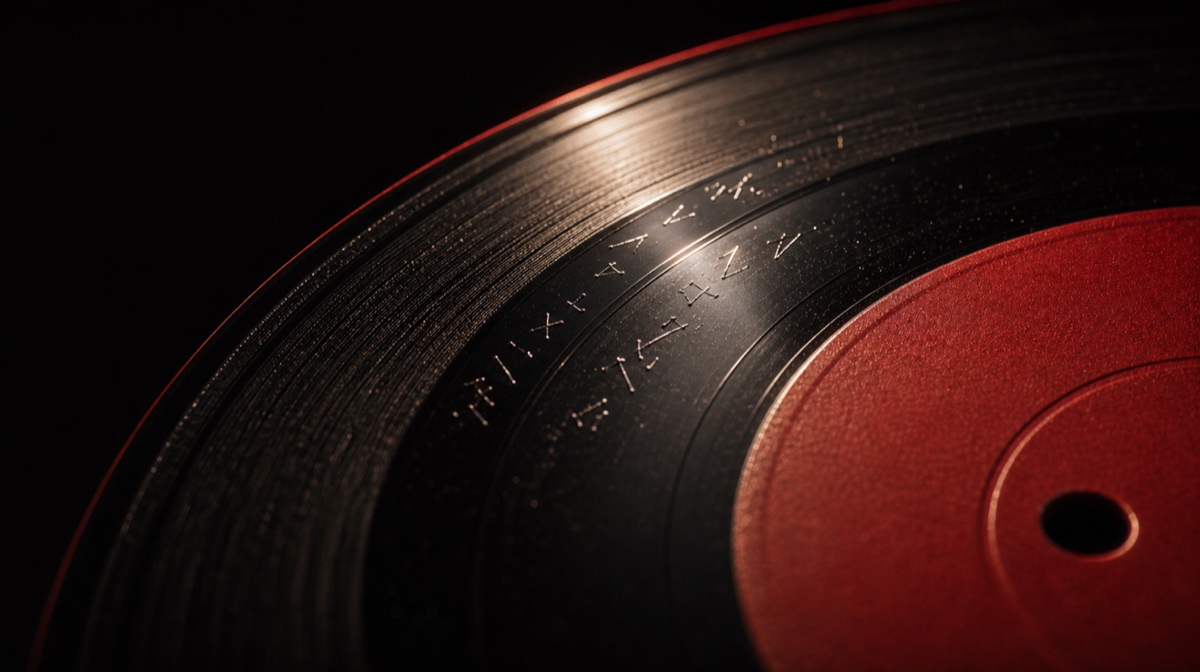
Flip the record to that shiny ring between the center label and the music — the runout, or matrix area. Hold it under a light and you'll find a string of etched or stamped characters. This matrix code is the strongest proof of a first pressing, because it points directly to the metal master used to stamp the disc that day. First pressings often carry the earliest matrix numbers, a cutting engineer's initials, and sometimes a stamper digit like "1". Copy down exactly what you read, character for character, to compare later.
2. Check the catalog number
Every album has a catalog number assigned by the label, printed on the label, the spine, and the back cover. The catch is that reissues often reuse or barely tweak it — so it can't decide the case alone, but it can rule things out. A first pressing's number is usually the shortest and plainest, with none of the later "RE", "180g", or "Remastered" suffixes. A matching number is only the first gate; a mismatch usually means a later version.
3. Look at the label logo and address
A label's logo, typeface, and the address line on the back cover change every few years. That makes them a natural date stamp. An early logo paired with an old address often pins down the year better than the catalog number does. Spend a little time learning which logo your target label used in the years your album came out — this is what lets a veteran call it at a glance.
4. Inspect the cover's craft
First-pressing covers often show finishing that later versions drop: a laminated sheen, the direction the sleeve opens, embossing or foil, the thickness and even the smell of the cardboard. To cut costs, reissues trim these first. Turn the cover over in your hands — its feel frequently tells you the era before any printed detail does.
5. Match the inserts and inner sleeve
Lyric inners, posters, original inner sleeves — these are the first things lost between owners and the first things a reissue swaps for something cheaper or skips entirely. A complete, period-correct set of inserts both adds value and confirms you're holding an early version. Missing pieces don't prove a reissue, but a full set is a strong signal.
When you're unsure, verify it
When two or three of the signs above point the same way, your confidence is already high. The last step is to take your copied matrix code and catalog number to a pressing database like Discogs and check them line by line — it lists dozens of versions of the same album, and once the matrix matches, the pressing usually falls right into place. Identifying versions is the most valuable eye in collecting: for the same record, the person who can spot a first pressing is the one who comes out ahead on the trade.
FAQ
Is the first pressing always the most valuable?
Usually, but not always. Earliest pressings often command a premium, yet a later limited variant in better condition can be worth more. Verify the pressing, then judge value.