Vinyl grading explained: M to G
M / NM / VG+ … read the condition language behind every price.
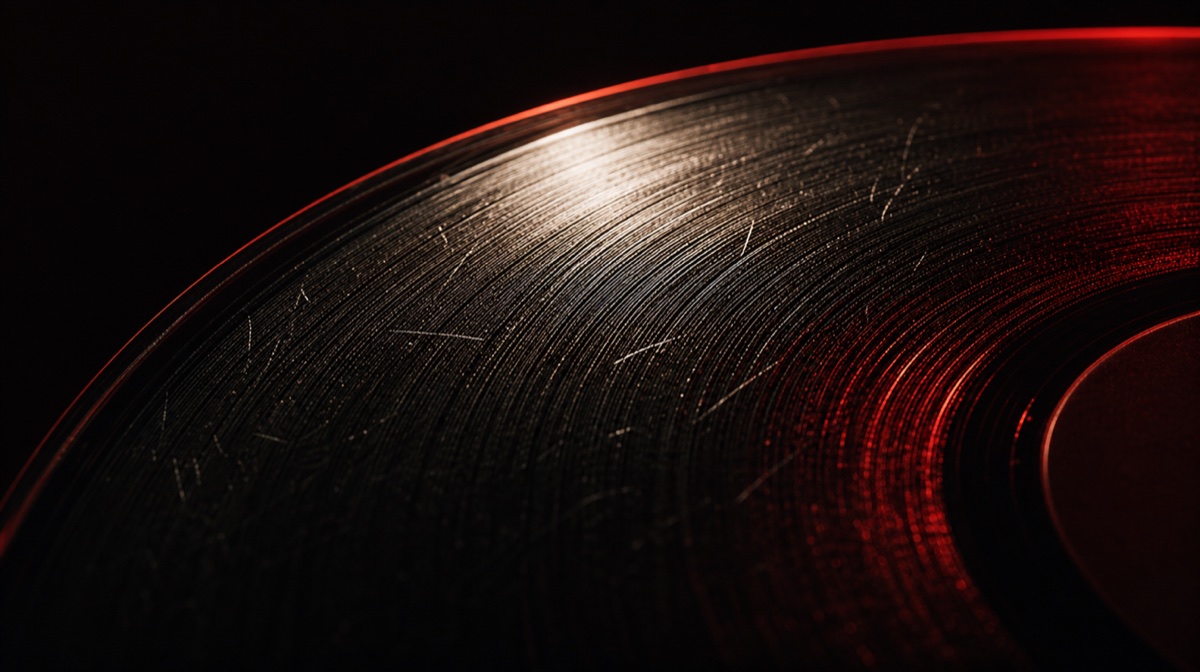
When you start pricing records, one truth shows up fast: the same title can be worth fifty dollars or five, and the only difference is condition. Grading is the shared language collectors use to describe that condition. Once you can read it, every price you see online suddenly makes sense.
Most of the hobby uses the Goldmine scale, a ladder of grades that runs from flawless down to barely playable. VinylLens uses a simplified five-step version of it: M, NM, VG+, VG, and G. Here is what each one actually means in hand.
M — Mint
Mint means perfect. The record looks like it was pressed an hour ago: no marks under raking light, no haze, dead-silent surfaces, and a jacket with crisp corners and no ring wear. True Mint is rare. Many serious sellers refuse to use the grade at all for an opened record, because almost nothing survives a single play in perfect shape. If you are tempted to call your copy Mint, look again under a bright lamp. You will usually find a reason to drop it one notch.
NM — Near Mint
Near Mint is the grade most "excellent" used records actually deserve, and it is the one VinylLens treats as the baseline for valuation. An NM record may have been played a few times but shows almost nothing for it: a faint sleeve scuff at most, glossy grooves, and clean, quiet playback. The jacket is bright with only the lightest signs of handling. NM is the sweet spot of the market — clearly used, but good enough that a buyer never feels short-changed. When you see a healthy "book value" for a title, it is almost always quoting an NM copy.
VG+ — Very Good Plus
This is where honest, well-loved records live. A VG+ copy has light surface marks that you can see but mostly cannot hear: a few faint scuffs, maybe a whisper of noise in a quiet passage. The jacket might show soft corners, a little ring wear, or a price sticker ghost. Nothing here ruins the listening experience. For most buyers who want to *play* the music rather than display a trophy, VG+ is the practical target — it usually costs well under an NM copy while sounding nearly as good.
VG — Very Good
A VG record has clearly been around. You will hear it: surface noise between tracks, some clicks and pops, scuffs you can feel with a fingernail. The music still plays through without skipping, but the wear is part of the experience now. Jackets at this grade often have seam splits, writing, or heavier ring wear. VG copies are the workhorses of the dollar bin — fine for casual listening, but priced at a fraction of NM. As a rule of thumb, expect roughly a third of NM value.
G — Good (and below)
"Good" is one of grading's little jokes: it is not good. A G record plays but fights you the whole way — constant noise, deep scratches, maybe a skip you have learned to live with. Jackets are tired, split, or written on. The only reasons to buy at this grade are rarity (you simply cannot find the title cleaner) or need (you want *a* copy to spin tonight). Value here is a small fraction of NM, often under a fifth.
How to grade your own records
- Use the right light. Tilt the disc under a single bright bulb so scratches catch the light. Daylight hides almost everything.
- Grade the play, not just the look. A record can look clean and still crackle. If you can, listen before you commit to a grade.
- Grade the jacket separately. Sellers often list two grades — one for the vinyl, one for the sleeve — because a clean record in a beat-up jacket is common.
- When in doubt, grade down. Buyers remember a pleasant surprise and resent a disappointing one. Conservative grading builds trust and protects your reputation if you ever sell.
Grading is a skill, and like any skill it gets faster with reps. The more records you put under the lamp, the quicker your eye gets at spotting the difference between a true NM and an optimistic VG+. That difference, multiplied across a shelf, is exactly what your collection is worth.
FAQ
What grade do most used records get?
Most honest used copies land at VG+ — light marks you can see but rarely hear. Near Mint is the valuation baseline; true Mint is rare for any played record.
Why grade the record and sleeve separately?
A clean disc often lives in a worn jacket. Sellers list two grades because condition — and value — can differ a lot between the vinyl and its cover.