Colored vinyl: why splatters and picture discs cost more
Limited runs, odd colors, picture discs — what really drives the premium.
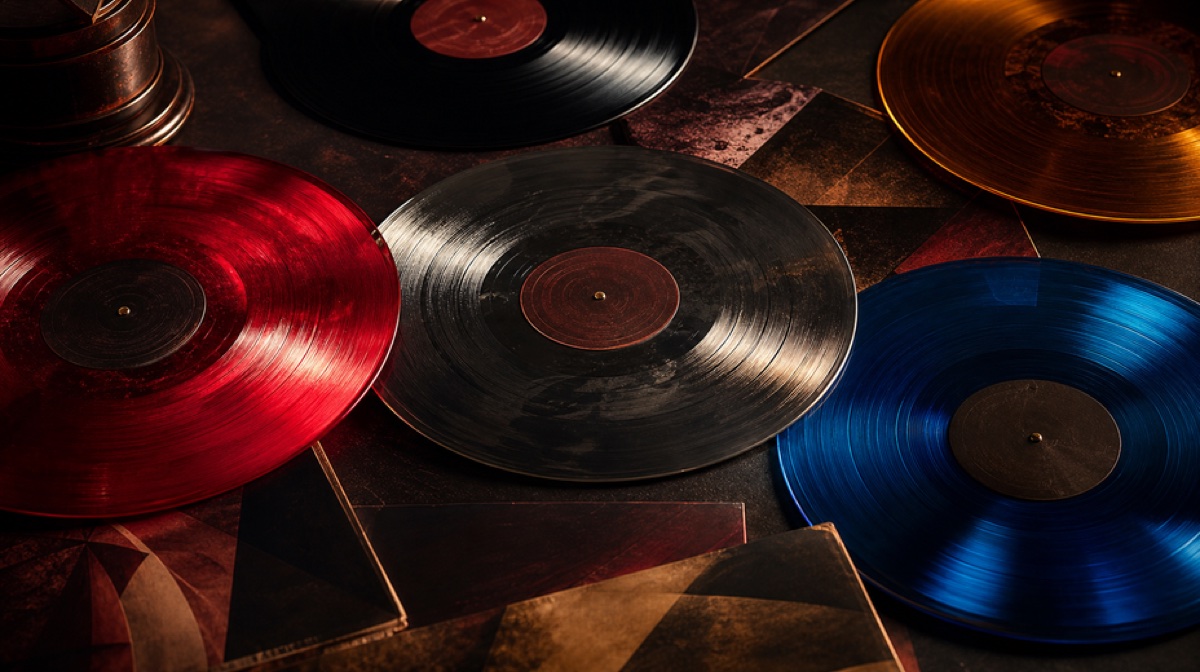
Walk into any record shop and you'll see them: translucent reds, marbled "splatter" pressings, picture discs with art printed right into the disc. They look special, and they're often priced that way. But the premium isn't really about the color — it's about what the color signals. Here's how to read it.
Scarcity is the real driver
Colored variants are almost always limited runs — a few hundred or a few thousand copies, often tied to a release event or a specific shop. Standard black is pressed to meet ongoing demand; a colored edition is capped and never repeated. When the run sells through, the only supply left is the second-hand market, and a small, fixed supply against steady demand is exactly what pushes a price up. The deeper the color story (numbered, region-exclusive, one-time event), the stronger the effect.
Picture discs trade looks for sound
Picture discs press the audio into a thin layer bonded over printed art. They're collectible to look at, but the construction usually means a slightly higher noise floor than a clean black pressing. That's worth knowing: a picture disc's value leans on display appeal and scarcity, not playback quality. Many collectors keep one sealed for the shelf and a black copy to actually play.
How to judge a colored pressing's value
Three questions settle most cases. First, how limited was it — a stated, low run beats a vague "limited." Second, how is the condition, including the print on a picture disc, which can scuff. Third, is there real demand for this title, or just for the color? Color alone doesn't make a record valuable; color plus a wanted title plus a small run does. Scan a pressing to see how its specific variant sits against recent sales before you pay the premium.
Not every color carries the same premium
There's a rough hierarchy. A standard one-color pressing — a single solid or translucent shade — usually carries a modest premium over black. Splatter, marble, and multi-color pours are harder to produce and often more limited, so they tend to sit higher. Numbered editions and region- or store-exclusives add a verifiable scarcity that collectors trust. Picture discs are their own category, prized for display and discounted by some listeners for sound. Knowing where a variant sits on this ladder helps you judge whether an asking price is reasonable.
Condition quirks worth knowing
Color changes how flaws show. Scuffs and fingerprints are far more visible on clear and translucent vinyl than on black, so grade those copies under strong, raking light. Picture discs can scuff on the printed face and are harder to clean without marking the art. And because colored runs are small, finding a clean replacement later is harder — another reason a well-kept colored copy tends to hold its value.